
Accessible Transport Investment Could Add £176bn to UK Economy
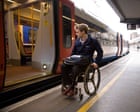
Accessible Public Transport Could Transform UK Economy
A comprehensive new report demonstrates that accessible public transport represents one of the most significant untapped economic opportunities facing the United Kingdom. According to analysis from the Institution of Mechanical Engineers (IMechE), transforming the nation's bus and rail networks to ensure full accessibility could generate substantial economic growth while simultaneously removing critical barriers that currently prevent millions of citizens from participating in the workforce.
The research reveals that the current accessible public transport infrastructure effectively excludes nearly 2.8 million people from employment opportunities. This figure represents a substantial portion of the working-age population who face systematic obstacles when attempting to access buses, trains, and station facilities. The Institution of Mechanical Engineers has calculated that investment in improving accessible public transport systems could unlock £176 billion in economic value for the nation.
Understanding the Scale of the Problem
The accessibility crisis within public transport extends far beyond individual inconvenience. When accessible public transport networks fail to serve disabled passengers adequately, entire demographics become systematically excluded from economic participation. The current transport system effectively locks out approximately one-quarter of the working-age population, creating a significant drag on economic productivity and growth potential.
This exclusion mechanism operates through multiple pathways. Buses that lack adequate ramps or level boarding platforms become inaccessible to wheelchair users. Train stations without elevators or suitable assistance provisions prevent people with mobility difficulties from traveling independently. Stations lacking clear navigation systems or assistance create barriers for individuals with visual or cognitive impairments. When accessible public transport fails these populations, employment becomes practically impossible for millions of citizens capable of contributing productively to the economy.
Economic Impact of Transport Accessibility Investment
The Institution of Mechanical Engineers' analysis demonstrates that accessible public transport investment would generate transformative economic consequences. The £176 billion figure represents not merely expenditure, but rather the measurable economic value that could flow from enabling currently excluded workers to access employment opportunities. This calculation incorporates increased tax revenues, reduced welfare expenditure, enhanced productivity, and expanded consumer spending from newly employed individuals.
Investing in accessible public transport creates multiplier effects throughout the broader economy. When disabled workers gain employment through improved transport access, they become consumers, taxpayers, and contributors to their local communities. Businesses benefit from expanded labor pools and access to talented workers previously excluded from consideration. The economic case for accessible public transport extends well beyond simple humanitarian concerns—it represents pragmatic economics that strengthens national competitiveness.
Making the Business Case for Inclusive Transport
The Institution of Mechanical Engineers has positioned accessible public transport not as a social obligation requiring subsidy, but rather as an economic investment yielding substantial returns. This reframing proves critical for gaining policy traction and securing necessary funding allocations. When accessible public transport is understood as economic infrastructure comparable to road networks or telecommunications systems, the justification for investment becomes clearer and more compelling.
Transport providers and government agencies increasingly recognize that accessible public transport creates operational efficiencies alongside social benefits. Modern accessible public transport design often improves service quality for all passengers—level boarding platforms benefit parents with strollers, elderly passengers, and travelers with luggage equally alongside disabled passengers. Investment in accessible public transport thus creates positive spillover benefits extending across the entire traveling public.
Barriers to Implementing Accessible Public Transport
Despite the compelling economic case, significant barriers impede progress toward fully accessible public transport systems. Many British railway stations were constructed decades ago when accessibility standards barely existed, requiring substantial retrofitting investment. Bus fleets require systematic replacement or modification to ensure universal accessible public transport standards. Financial constraints, coordination challenges between multiple transport operators, and outdated infrastructure create complex implementation obstacles.
The Institution of Mechanical Engineers acknowledges these challenges while emphasizing that delaying accessible public transport investments ultimately costs the economy far more than immediate action would require. Every year that passes without improving accessible public transport systems represents billions of pounds in lost economic potential and continued exclusion of capable workers from employment opportunities.
Future Implications for UK Transport Policy
The IMechE report signals growing recognition that accessible public transport represents foundational infrastructure deserving equivalent policy priority and investment funding as traditional transport improvements. As policymakers confront stagnating productivity growth and labor force participation challenges, investing in accessible public transport emerges as a multiplier strategy addressing several policy priorities simultaneously.
Implementation of truly accessible public transport would represent a significant cultural and operational shift. It requires viewing transport systems through an inclusive lens from initial design stages rather than treating accessibility as afterthought. When accessible public transport becomes the foundation rather than the exception, the entire transport ecosystem becomes more efficient, more equitable, and more economically productive.
The Institution of Mechanical Engineers' findings suggest that the £176 billion economic opportunity from accessible public transport will increasingly shape transport policy discussions. As disability advocacy groups, business leaders, and economic analysts unite around these figures, pressure will mount for meaningful investment and systematic transformation of Britain's public transport infrastructure toward full accessibility for all users regardless of ability status.