
Ford Brings Back Human Engineers as AI Quality Systems Fall Short
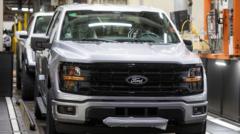
Ford's Return to Human-Centered Quality Control
Ford rehires human engineers after discovering that artificial intelligence systems cannot adequately replicate the precision and expertise required for comprehensive vehicle quality assessments. The automotive manufacturer made the strategic decision to reintegrate experienced technicians into their quality control operations, recognizing fundamental gaps in automated inspection processes.
The company's initial investment in AI-driven quality systems showed promise in theory, yet practical implementation revealed significant shortcomings. Ford rehires human engineers specifically because machine learning algorithms struggled to identify subtle defects, material inconsistencies, and performance issues that veteran inspectors detect through years of accumulated experience.
Why AI Quality Systems Proved Insufficient
Artificial intelligence quality control systems operate within predetermined parameters and rely on pattern recognition from training data. However, automotive manufacturing involves countless variables and edge cases that standard AI models cannot effectively address. The technology failed to match the adaptive reasoning capabilities that human engineers bring to quality inspections.
Veteran technicians possess intuitive knowledge developed through decades of hands-on experience. They recognize anomalies through sensory perception, contextual understanding, and judgment that current machine learning frameworks simply cannot replicate. When Ford's AI quality systems encountered novel defect patterns or manufacturing variations outside their training scope, accuracy rates dropped significantly.
Impact on Automotive Manufacturing Standards
This situation underscores broader challenges within the automotive industry regarding automation and artificial intelligence implementation. While AI excels at repetitive tasks and large-scale data analysis, nuanced quality assessment requires human judgment. Ford's experience demonstrates that wholesale replacement of experienced workers with automation overlooks critical operational realities.
The decision to rehire human engineers represents a pragmatic acknowledgment that manufacturing quality requires both technological sophistication and human expertise. Advanced systems work most effectively when integrated with human oversight rather than operating as standalone solutions.
The Value of Experienced Technicians
Experienced engineers bring irreplaceable value to quality control processes. Their deep understanding of manufacturing processes, historical knowledge of vehicle performance issues, and ability to recognize emerging patterns make them invaluable. These professionals can make judgment calls that protect both company reputation and consumer safety.
Human inspectors excel at identifying problems that don't fit established categories. They understand context, anticipate potential complications, and make decisions based on comprehensive knowledge that extends beyond programmed parameters. This capability proved essential for maintaining Ford's quality standards.
Looking Forward: Hybrid Quality Systems
Rather than choosing between human expertise or artificial intelligence, forward-thinking manufacturers increasingly recognize the value of hybrid systems. Combining AI's efficiency and consistency with human judgment creates more robust quality assurance frameworks.
Ford's approach of reintegrating human engineers alongside AI systems represents intelligent manufacturing strategy. Artificial intelligence handles high-volume scanning, initial defect detection, and data aggregation, while human experts provide sophisticated analysis, decision-making, and quality assurance oversight.
Broader Industry Implications
The automotive sector continues evolving toward increasingly automated manufacturing processes. However, Ford's experience illustrates that critical functions—particularly those affecting safety and quality—benefit from human involvement. This lesson extends beyond Ford to manufacturers across industries implementing artificial intelligence solutions.
Companies investing heavily in AI implementation must carefully evaluate whether automation genuinely improves outcomes or simply reduces immediate labor costs while creating long-term quality problems. Ford rehires human engineers because the business case for quality protection outweighs short-term cost savings from full automation.
The company's decision ultimately reflects mature business thinking: technological innovation serves human needs and organizational objectives, not vice versa. When artificial intelligence systems fail to deliver expected results, intelligent organizations adjust strategies rather than doubling down on flawed implementations.