
Helium-3 Mining: Could the Moon Become Earth's Energy Solution?
Understanding Helium-3: The Rare Isotope Reshaping Energy Prospects
Helium-3 mining has emerged as a groundbreaking concept that could fundamentally transform how humanity sources energy in the coming decades. This rare isotope, produced through nuclear fusion and present in limited quantities on Earth, exists in significantly larger deposits beneath the lunar surface. As global energy consumption continues to accelerate and conventional resources face depletion, scientists and space agencies are increasingly examining the feasibility of extracting helium-3 from the moon to meet Earth's future power requirements.
Helium-3 is an isotope of helium containing two protons and one neutron, making it lighter than the more common helium-4 found in standard helium balloons and industrial applications. This distinctive composition grants helium-3 unique properties that make it particularly valuable for advanced fusion reactor technology. Unlike traditional fossil fuels, helium-3 fusion reactions produce minimal radioactive byproducts, positioning this resource as an exceptionally clean energy alternative for future generations.
Why Is Helium-3 Becoming Increasingly Valuable?
The surging demand for helium-3 stems from multiple interconnected factors affecting our global economy and technological landscape. Current production on Earth remains severely limited, with most helium-3 generated as a byproduct of nuclear weapons development and decommissioning processes. This constrained supply chain has resulted in astronomical prices that continue climbing annually, making helium-3 accessible only to specialized research institutions and government agencies conducting cutting-edge scientific work.
As fusion energy technology matures and moves closer to commercial viability, experts predict that helium-3 demand will experience exponential growth. Major research facilities, medical imaging centers, and advanced industrial applications increasingly compete for limited helium-3 supplies, driving prices to unprecedented levels. This economic pressure has catalyzed serious discussions about locating alternative sources capable of meeting projected 21st-century energy demands.
The Moon: An Untapped Repository of Helium-3
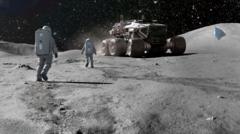
The lunar surface contains vast quantities of helium-3 accumulated over billions of years through solar wind deposition. Unlike Earth, the moon lacks a protective magnetic field and dense atmosphere, allowing charged particles from the sun to strike the regolith directly. This continuous bombardment has embedded helium-3 isotopes deep within lunar soil and rocks, creating concentrations estimated at between one million and five million metric tons across the entire lunar surface.
Scientific evidence gathered from lunar samples returned during Apollo missions confirmed helium-3 presence in concentrations significantly higher than anything achievable through terrestrial production. Some researchers suggest that mining merely a few hundred metric tons of helium-3 from the moon could satisfy humanity's entire annual energy requirements for decades. This extraordinary potential has attracted substantial investment from both governmental space agencies and private aerospace companies seeking to establish lunar resource extraction operations.
Technical Challenges in Helium-3 Extraction Operations
Despite the enormous promise, extracting helium-3 mining operations from the moon presents formidable technical obstacles that must be overcome before commercial viability becomes achievable. The isotope exists in extremely low concentrations within lunar regolith, necessitating the processing of enormous soil volumes to extract economically viable quantities. Current proposals suggest heating lunar soil to extremely high temperatures, causing helium-3 to separate and concentrate for collection and transportation back to Earth.
Transportation represents another critical challenge in helium-3 mining ventures. Establishing reliable cargo systems capable of bringing extracted materials from the lunar surface to orbital transfer stations requires revolutionary advances in reusable spacecraft technology and in-space refueling infrastructure. The costs associated with launching mining equipment, maintaining extraction facilities, and transporting processed helium-3 homeward currently exceed the economic value of extracted material under most realistic scenarios.
Future Prospects for Lunar Resource Development
Multiple organizations are advancing helium-3 mining feasibility studies and developing technologies that could make lunar extraction economically viable within the coming decades. Space agencies from the United States, China, Russia, and India have incorporated lunar resource exploration into their strategic objectives. Private companies including SpaceX, Blue Origin, and specialized space resource firms are simultaneously developing technologies and business models designed to support eventual commercial helium-3 extraction operations.
Investment in supporting infrastructure, such as lunar bases, mining equipment, and orbital processing facilities, will likely precede large-scale helium-3 mining operations. Initial phases may focus on establishing permanent human settlements capable of supporting resource extraction activities, while simultaneously advancing fusion reactor development on Earth. As both technologies mature simultaneously, the economic equation surrounding helium-3 mining will shift dramatically in favor of lunar resource utilization.
Conclusion: Helium-3 and the Future of Clean Energy
Helium-3 mining represents an extraordinary opportunity for humanity to access virtually unlimited clean energy resources. While significant technical, economic, and logistical challenges currently prevent immediate implementation, continued technological advancement and increasing energy demands suggest that lunar helium-3 extraction will eventually become a critical component of Earth's energy infrastructure. As space exploration capabilities expand and fusion technology matures, the moon's helium-3 deposits may ultimately prove essential to sustaining civilization's future energy requirements.