
Iran's Supreme Leader Absent at Senior Officials' Funeral
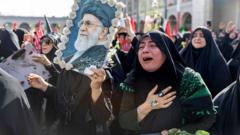
Iran's Supreme Leader Maintains Low Profile During Official Ceremony
Iran's supreme leader has been notably absent from public appearances as senior government officials convened for funeral rites honoring a prominent religious figure. The lack of visibility from Iran's top leadership has sparked speculation regarding his whereabouts and current involvement in state affairs during this significant period.
Context of the Absence
The conspicuous absence of Iran's supreme leader coincides with an escalating security situation in the Middle East region. Following a significant attack that resulted in casualties among Iran's highest-ranking religious figures at the beginning of the US-Israel military confrontation with Iran, the nation's supreme leadership has retreated from the public eye.
Mojtaba Khamenei, a figure of considerable importance within Iran's power structure, has not made any public appearances since the aforementioned attack. His withdrawal from visible governmental functions has raised questions about continuity in Iran's decision-making processes and the operational stability of the nation's administrative apparatus during this volatile period.
Government Officials' Participation in Funeral Proceedings
Despite the supreme leader's absence, high-ranking officials from Iran's government hierarchy attended the funeral ceremony to pay their respects. The attendance of these senior figures demonstrated the significance accorded to the deceased ayatollah within Iran's religious and political establishment.
The gathering of governmental dignitaries underscored the importance of maintaining institutional continuity and showing public commitment to religious traditions during turbulent times. Their presence served to reinforce the stability of Iran's governmental structures, even as questions persisted about the location and activities of Iran's supreme leader.
Regional Implications and Security Concerns
The timing of these events, occurring at the outset of broader military tensions involving the United States, Israel, and Iran, has added complexity to the situation. The absence of Iran's supreme leader from public view during such critical circumstances raises concerns about potential impacts on diplomatic communications and crisis management capabilities.
Observers have noted that leadership visibility typically plays a crucial role during periods of heightened international tension. The sustained absence of Iran's supreme leader from public forums may signal either heightened security protocols or an indication of the severity of the situation confronting the nation.
Historical Significance of Funeral Observances
In Iran's political and religious culture, funeral ceremonies for prominent ayatollahs carry substantial symbolic weight. These events traditionally serve as platforms for demonstrating governmental unity and affirming commitment to Islamic principles that underpin the nation's governance structure.
The funeral proceedings proceeded according to established protocols, with government representatives fulfilling their ceremonial obligations despite the exceptional circumstances surrounding the event. The attendance of senior officials reflected institutional recognition of the ayatollah's status and contributions to Iran's religious framework.
Questions About Leadership Continuity
The extended absence of Iran's supreme leader has generated international and domestic scrutiny regarding governmental decision-making and strategic planning. During periods of military confrontation and regional instability, the visible leadership presence typically serves important functions in reassuring both the population and international observers about governmental stability.
The situation highlights the centrality of Iran's supreme leader to the nation's power structure and the potential implications when that position becomes obscured from public awareness. Questions persist about whether normal governmental functions continue uninterrupted or whether alternative arrangements have been implemented to address the absence.
Looking Forward
As the situation evolves, attention remains focused on when Iran's supreme leader will resume public appearances and what statements or actions may follow. The duration and nature of this absence may provide insights into the broader trajectory of Iran-US-Israel tensions and the stability of Iran's governmental institutions.
The funeral ceremony represented a moment where Iran's governmental apparatus demonstrated continuity despite extraordinary circumstances. However, the fundamental questions about leadership visibility and its implications for national governance during this critical period remain unresolved, likely shaping international assessments of Iran's current situation and future trajectory.