
Zelensky Returns Poland's Highest Honor Amid Historical Tensions
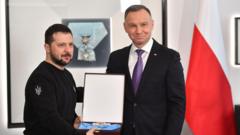
Zelensky Returns Poland's Highest Honor Amid Historical Tensions
Ukraine's president has made the significant decision to return Poland's highest state honor following its revocation, marking an important moment in the relationship between the two nations. This move by the Ukrainian leader reflects a willingness to engage in constructive dialogue regarding the complex and sensitive historical chapters that have shaped both countries' identities and borders throughout the 20th and 21st centuries.
Understanding the Honor and Its Significance
The highest state honor represents one of Poland's most prestigious decorations, bestowed upon individuals who have made extraordinary contributions to the nation or its international standing. Zelensky returns Polish honor with this gesture, which carries substantial diplomatic weight and demonstrates respect for Polish institutions and historical memory.
Opening Dialogue on Shared History
In his statement regarding the return of this prestigious award, Ukraine's president emphasized his nation's openness to meaningful engagement and discussion. He acknowledged that both Poland and Ukraine share what he described as "difficult and painful chapters of our shared past," recognizing that these historical events require thoughtful examination and mutual understanding between the two nations.
The phrase "engagement" on such matters represents a diplomatic approach that seeks to address historical grievances through dialogue rather than confrontation. This positioning suggests that the Ukrainian leadership views historical reconciliation as essential to strengthening bilateral relations and fostering greater regional stability in Eastern Europe.
Historical Context Between Ukraine and Poland
The relationship between Ukraine and Poland has been marked by complex historical interactions, including periods of territorial disputes, cultural exchanges, and shared experiences under various empires and regimes. These historical events have occasionally created tensions between the two nations, particularly regarding how each country remembers and interprets significant historical episodes.
By acknowledging these "difficult and painful chapters," Zelensky demonstrates an understanding of Poland's historical sensitivities and cultural memory. This recognition is particularly important given the geopolitical significance of both nations in Eastern Europe and their strategic importance to broader European security and stability.
Diplomatic Significance of the Gesture
The decision to return Poland's highest state honor serves multiple diplomatic purposes. First, it demonstrates respect for Polish institutions and the significance Polish society places on historical memory and national symbols. Second, it signals Ukrainian willingness to move beyond historical grievances toward constructive engagement.
Such gestures in international relations often carry greater weight than formal statements alone. By taking concrete action through the return of this honor, the Ukrainian president underscores the seriousness of his commitment to improving relations and addressing historical concerns that matter deeply to the Polish people.
Building a Foundation for Future Relations
The opening expressed by Ukraine's leadership regarding "engagement" about shared history suggests both nations are moving toward a framework where difficult conversations can occur productively. This approach acknowledges that nations with complex histories can work toward mutual understanding and respect without minimizing the significance of past events.
For Poland and Ukraine, such engagement becomes increasingly important given their geographical proximity, cultural connections, and mutual interests in European integration and security. The willingness to discuss historical matters constructively can help prevent misunderstandings and build trust between governmental and civil society institutions in both countries.
Regional Implications
The diplomatic development involving Zelensky returns Polish honor reflects broader patterns of Eastern European nations seeking to strengthen bilateral relationships while managing historical legacies. In a region where history continues to influence contemporary politics and international relations, such constructive approaches represent significant progress.
Ukraine's emphasis on openness to dialogue may also have implications for how other neighboring nations approach their own historical disagreements and diplomatic relationships. The example set by Ukrainian leadership in acknowledging difficult history while proposing engagement offers a model for regional cooperation.
Looking Forward
Moving forward, the Ukrainian government's stated openness to engagement about "difficult and painful chapters" suggests that practical mechanisms for historical dialogue may be developed. Such mechanisms could include joint historical commissions, educational initiatives, and cultural exchanges designed to deepen mutual understanding.
The return of Poland's highest state honor represents more than a symbolic gesture; it reflects a strategic choice by Ukrainian leadership to prioritize dialogue and reconciliation. This approach acknowledges that shared prosperity and stability in Eastern Europe depend on nations being willing to address historical grievances through constructive engagement rather than perpetuating historical tensions that could undermine contemporary cooperation and mutual security interests.