
Colombia's Gang Violence Crisis Shapes Pivotal Presidential Battle
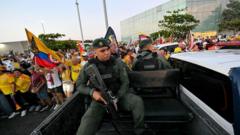
Colombia's Presidential Election Defined by Armed Conflict
Colombia's upcoming presidential election represents a critical juncture in the nation's ongoing struggle with organized violence and internal security challenges. The political landscape has become increasingly polarized around competing visions for addressing the country's most pressing issue: the escalating armed conflict that continues to destabilize regions and claim lives.
At the center of this electoral battle stands a fundamental disagreement about how to confront the criminal organizations that have seized control of territory across the nation. The candidate who emerges victorious will inherit responsibility for implementing strategies that could either intensify military operations or pursue alternative diplomatic pathways through negotiation.
The Left-Wing Senator's Approach to Gang Negotiations
One prominent contender brings decades of progressive political experience and advocates for dialogue-based solutions to gang violence. This left-wing senator has publicly championed the concept of engaging with armed groups through negotiation frameworks, arguing that military-only approaches have failed to produce lasting peace.
This candidate's platform emphasizes understanding the socioeconomic root causes that drive recruitment into criminal organizations. By proposing conversations and potential agreements with gang leadership, the senator represents a departure from traditional hardline security policies. This approach reflects broader leftist ideology that views armed conflict through lenses of economic inequality and systemic injustice rather than purely as criminal enterprises requiring elimination.
Supporters of this candidacy argue that negotiated settlements have precedent in Colombian history and could reduce violence more effectively than continued military confrontation. They point to previous peace processes as models, though critics contend that negotiations with criminal gangs differ fundamentally from peace talks with ideologically-driven insurgent movements.
The Trump-Endorsed Political Outsider
The opposing candidate represents a starkly different vision, positioned as a political outsider who has received notable endorsement from former U.S. President Donald Trump. This contender advocates for aggressive law enforcement and military responses to gang-related violence and drug trafficking operations.
Backed by international conservative circles, this outsider candidate emphasizes traditional security measures, including expanded police operations, military deployment to gang-controlled territories, and stricter criminal penalties. The candidate's campaign messaging highlights personal success in business or other non-political sectors as qualification for executive leadership, a common outsider narrative in contemporary politics.
Trump's endorsement carries significant weight in Colombia's political discourse, reflecting broader hemispheric conservative interests in maintaining strong security partnerships with the United States and pursuing conventional counter-narcotics and counter-gang strategies.
Violence's Impact on Electoral Dynamics
The escalating nature of Colombia's armed conflict has directly shaped campaign agendas and voter priorities. Regions experiencing intensive gang activity report different voting patterns compared to areas with less visible violence. Security concerns dominate voter considerations across urban and rural constituencies.
Recent months have witnessed increasing criminal organization activity, including territorial disputes between rival gangs, attacks on infrastructure, and intimidation of civilian populations. These events have elevated the election's stakes, making security policy the paramount electoral issue rather than secondary concern.
International Dimensions and Strategic Interests
The presidential election extends beyond domestic Colombian concerns into regional geopolitics. The United States maintains substantial interests in Colombian security policy, counter-narcotics cooperation, and political alignment. Trump's endorsement of the outsider candidate reflects these strategic considerations and signals preferred U.S. policy direction.
Meanwhile, the left-wing senator's diplomatic approach receives support from certain international quarters skeptical of military solutions and emphasizing human rights and dialogue-based conflict resolution frameworks.
Campaign Messaging and Voter Concerns
Both candidates have built campaign strategies around distinctly opposed narratives regarding armed conflict solutions. The senator emphasizes compassion, understanding, and dialogue while criticizing decades of unsuccessful military interventions. The outsider emphasizes decisiveness, strength, and traditional law enforcement approaches while criticizing perceived softness toward criminal organizations.
Voters face a consequential choice between fundamentally different philosophies regarding how states should respond to organized violence within their territories. This represents not merely tactical disagreement but philosophical division about governance, justice, and the appropriate use of state power.
Implications for Colombia's Future Security
Whichever candidate prevails will inherit responsibility for implementing policies affecting millions of Colombians facing daily security threats. The election's outcome will determine whether Colombia pursues negotiation-based or enforcement-based approaches to its persistent armed conflict crisis, shaping the nation's trajectory for years ahead.